Sunday, February 9, 2014

News about Israel that you are unlikely to find in the media

  • After many delays, Jerusalem’s electrified, light rail system eventually began running in 2011 and is now proving extremely popular. The ultra-modern and comfortable trains run from Jerusalem’s northern edge to Mount Herzl in the south with further extensions to Neve Yaacov in the north and Hadassah Hospital, Ein Kerem in the west, planned for the future. The lines run for 13.9 kilometres (86 miles) through the capital, stopping at most major tourist sites and connecting with bus lines. All announcements are clearly made in Hebrew, English and Arabic. Click on the video and enjoy the ride.
  • Bio-Bee Biological systems, an Israeli company that specializes in biologically-based integrated pest management, aiming to reduce the use of harsh, chemical pesticides is launching its operations in parts of India. Bio-Bee implements this method by mass harvesting beneficial insects and mites that provide natural enemies for biological pest control or natural pollination. The company employs a team of trained local agronomists that advises the region’s farmers and helps them implement the new technology together with guidance from Israeli specialists.

    (NoCamels)
  • A unique structure from the Hasmonean period has been discovered by the Israel Antiquities Authority in the City of David National Park, adjacent to the walls of Jerusalem’s Old City. Ancient historian, Flavius Josephus wrote about Hasmonean Jerusalem but only recently have the remains of a structure from 200 B.C.E. been found. The structure’s broad walls which measure more than a metre are built from roughly hewn limestone blocks which are lain in a fashion characteristic of the Hasmonean period. Many pieces of pottery and also various coins were found in the roughly 690 square foot structure. The coins indicate that it was built at the beginning of the second century and was used well into the Hasmonean period.

image

(Israeli Antiquities Authority)

  • “The Pioneers of Liberation,” is the title of para-military training camps run by the Hamas government in Gaza to teach high-school children to, “follow in the footsteps of suicide martyrs.” This year around 13,000 students participated in these one-week training camps whose curriculum includes weapons training, first-aid, self-defence, marching and security exercises. The participants also take part in awareness exercises on how to identify Israeli spies. Hammad, the interior minister said that this training was in preparation for – “the coming war with Israel.”

(Times of Israel)

  • During February, 4,721 truckloads of goods were imported into the Gaza Strip through the Kerem Shalom land crossing, these included 1,636 truckloads of construction materials. Also last month, 109 truckloads of goods were exported from Gaza for sale in foreign markets. including fresh produce, flowers and plane trees. Unfortunately the Kerem Shalom crossing had to be closed on two occasions last month in response to Hamas rockets being fired into Israel.

(IDF Website)

  • An Israeli company, “City Transformers,” has invented every motorist’s dream, a folding car that takes up just a quarter of a regular parking spot. The car is also eco-friendly and takes only the press of a button for the car to compress from 1.6 metres (5 foot 3 inches) to 1.0 metres (approximately 3 foot 3 inches.) The inventors, Asaf Formoza and Gideon Goldwine, both have PhDs degrees in Engineering from the University of Ben Gurion while their partner, Erez Alramov, has vast experience in driving, designing and building cars. Thinking of buying one? The car should be on the market in about three years from now.
  • Just a year ago, an IDF unit serving on the Syrian border in the Golan Heights encountered seven wounded Syrians who asked for medical help. When contacted, the Director of the Nahariya Hospital answered immediately, “We are ready!” So began a unique humanitarian aid operation given by the IDF medical Corps and several hospitals in northern Israel to Syrian civil war casualties. Up to now, 550 Syrians have been treated and returned to Syria with no indication that they have ever entered Israel. While the casualties are mainly men, there have been a number of children and even women giving birth. Under the title, Operation Human Warmth, a number of Israeli youth groups and schools are coordinating the collection of donations and warm winter clothing for Syrian refugees who are suffering in camps during this exceptionally cold winter weather.

Thursday, January 9, 2014

NEWS ABOUT ISRAEL THAT YOU ARE UNLIKELY TO FIND IN THE MEDIA

· Over 500 million birds fly over Israel every year to and from winter sheltering -spots.  This is one of the busiest migration routes in the world.  Yossi Leshem, an Israeli scientist and ornithologist, one of the world’s foremost experts on bird migration, has devoted his life to creating a safer environment for birds and people worldwide.  Click the link to watch the short video entitled, The Man Who Taught me to fly

http://youtu.be/k2WvIDgCHlA

· Archaeologists have recently discovered a village from Talmudic times that was home to many potters.  The village which was known as Shikhin, was found near to Tzipori in the    Galili and will, says Dr. Mordechai Aviam co-director of the project, help to answer crucial questions surrounding the identity of the Galileans and about Jewish life in the region including the origins of Christianity.  Shikhin is one of the two earliest names known from the Second Temple period and is mentioned by Flavius Josephus along with neighbouring city Sepphoris (modern Tzipori) as well as in the Talmud, as a village that was home to many potters.  Already the moulds of seven different shapes of oil lamps have been discovered, the largest amount ever found in one village.

· Israeli Professor David Newman, dean of the Faculty of humanities and social sciences at Ben Gurion University, is shortly to be honoured by the Queen of England with an O.B.E. (Officer of the Most Excellent Order  of the British Empire) This honour is to be given to Professor Newman who was born in the UK, for his contribution to promoting academic cooperation between Israel  and England.

· Dr. Osnat Zomer-Penn of Tel Aviv University who is researching the genetic origins of autism, is one of three Israelis chosen to compete in the finals, and the third Israeli in a row to actually win the L’Oreal-UNESCO prize.  She recently received the European award in a ceremony at the Sorbonne in Paris.  The L’Oreal-UNESCO Women in Science Prize has been awarded for the past eight years with Israel joining in 2008 since when, Israel, though one of the smallest countries participating in the event, has become one of its biggest winners with three Israelis winning the European award over the past three years.  Dr. Anat Yonath who went on to win a Nobel Prize won the award in 2008 and Israeli Victoria Yavlasky won in  2005.

(Times of Israel)

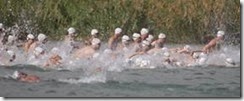
· In the first week in October, over 10,000 participants, including British Ambassador to Israel, Matthew Gould, took part in the 59thannual Kinneret (Sea of Galilee) swim which is the largest amateur sports event in Israel.  Swimmers can choose from the long swim, 3.5 Km right across the lake or the shorter one of 1.5 Km.  The event attracts both Israelis as well as many foreign visitors and is very efficiently organised with all possible precautions taken to ensure the safety of the swimmers.

clip_image001

· Nine-year-old Noam Glick who was shot in the shoulder by a masked terrorist last Saturday night while in the garden of her home in the West Bank village of Psagot is back from hospital and recovering well.  Two Palestinians from the West bank city of El-Bireh have been arrested in connection with the crime.  Security forces believe that one man planned and executed the attack while the other assisted. One of the masked men cut through the steel chain fence surrounding  Psagot , ran up a rocky hillside and shot at  Noam who was just returning from B’nei Akiva  (a Jewish youth club) It is likely that her screams which were immediately heard by her father, prevented the gunman from entering further into the village and causing deaths and even worse injuries.

WEDDINGS

Our grandson’s recent wedding having been a high spot in our lives, the theme of nuptial ceremonies and the various ways marriages are celebrated both within Judaism and in other religions has been uppermost in our minds lately which explains this month’s topic.

A CHURCH WEDDING

We have been to an interesting variety of wedding ceremonies in our lives, not all of them Jewish but perhaps the most unusual one for people of our background was that of the daughter of a titled family held in a small church in a picturesque country village near Banbury. The reasons we became involved with the family and were invited to the wedding are too complicated to explain here but we felt compelled to accept and decided to keep a low profile, sit at the back of the church and pay only the briefest of visits to the reception. Our plans were foiled, however, when on arrival at the outskirts of the village our car was stopped by a young man dressed in a morning suit, the same attire worn by all the guests except Norman and the family gardener, who, having asked our names, arranged for us to park in a reserved spot immediately outside the church where we were met by the grandmother of the bride, Lady S-, who linked her arm in Lola’s and escorted us to the front of the church where seats had been reserved for us in the midst of the family. Our main memory, apart from the embarrassment of the situation, was of the beautiful organ music and the overwhelming scent from the many beautiful flower arrangements. We have to say that the wedding reception, held in a chilly damp marquee, where the repast consisted of paper thin and very dry sandwiches, wedding cake and warm champagne did not live up to the beauty of the ceremony.

A SIKH WEDDING

Another memorable celebration was a Sikh wedding of one of the five lovely daughters’ of Leamington & Warwick’s Race Relations Officer, which stands out in our minds for the brilliantly coloured clothes worn by the women, the dazzling beauty of the bride , unusual music and tooth-achingly sweet delicacies served at the reception.

OUR GRANDSON’S WEDDING

Our grandson’s wedding had all the necessary traditions of chuppah, brachot, ketubah and the couple were married by our very own rabbi and friend from our Gilo shul, but was, happily, unlike some weddings we have attended in Israel, not overly religious. We have been to a number where men and women were seated separately and even one where the sexes were completely separated in different halls. These experiences were such that we now find we have a previous engagement when invited to similar celebrations. Almost all the weddings we attend in Israel have separate sex dancing even if the sexes are permitted to mingle during the meal but this can be fun. Lola is always amazed at the intricate dance steps, skilfully carried out by the young women who attend religious schools and seminaries and who have obviously devoted a great deal of time to learning them. Norman usually refuses to join in as the young men are alarmingly boisterous and he feels in danger of being knocked off his feet or worse. Not an unfounded fear as some years ago in Jerusalem, the floor of a wedding hall collapsed because of this kind of manic dancing and, tragically, a number of guests were killed and many injured. The older men, however, tend to shuffle around the floor, doing their duty and looking like zombies, not at all Norman’s style having done a nifty tango in his youth. Every wedding we ever go to, religious or otherwise, has one thing in common, over-loud music that makes conversation impossible and often causes the room to vibrate. We were grateful that at our grandson’s celebration, the music, for the mixed dancing that we have to admit to still enjoying, did not reach that pitch until later in the evening so that the guests were all able to enjoy talking to each other during the excellent meal.

INFORMAILITY

I think what surprised the guests from the U.K and America at the recent event was the informality of the occasion, the way the bride and bridegroom mingled with the guests prior to the ceremony and how guests hugged them and patted them on the back as they walked together to the chuppah.. Had it been a really Orthodox wedding the bridegroom would have been secluded with the officiating rabbi, the witnesses and several bottles of whiskey, prior to the chuppah, while the bride would have been sitting quietly, reciting psalms. Not so on this occasion.

ISRAELI WEDDING HALLS

Israeli weddings also tend to be huge, as second and third cousins plus their offspring as well as most of the family’s neighbours and work associates have to be invited, so it’s not unusual for there to be a guest list of 600 and more, although at our recent family event the number was, with difficulty and at the risk of offending a few people, kept down to 460. More and more, large wedding halls are springing up all over Israel, some just simple rooms, others ostentatiously palatial and there are many outdoor venues for summer events. The hall in Jaffa, selected for our grandson’s wedding had a glass wall, overlooking the sea with a stunning view of the Tel Aviv-Jaffa coastline and was, we thought, elegant and in good taste. (Well, we would think that wouldn’t we?) All in all, the setting was delightful, the food delicious and it was a joyful and happy occasion, shared with family and special friends, in fact, all that one could wish for from a simcha. We shall be looking at the photographs and recalling the memories of the evening , hopefully, for many years to come.

CHANGES.

FOOD SHOPPING

In the nearly 30 years since we came to live in Jerusalem it is inevitable that we should have seen a great many changes. Most of them, we are happy to say, for the better. Probably the one that has the most impact on our lives are the shopping facilities, both locally in Gilo and in the centre of town, where the general standards have improved immeasurably since our arrival. Gone are the days when one dare not plan meals ahead of time but waited to decide on the menu until one saw what was available in the shops and when the Gilo supermarket was dirty and full of flies. The only cheese available was a tasteless and chewy, yellow variety of the consistency and flavor of rubber and items such as mushrooms were a rarely available luxury. Now we have supermarkets all over Jerusalem that equal the well-known chains in the U.K., our cheese counters stock most of the known varieties, many of them manufactured in Israel, several types of mushrooms are always on sale and our supermarkets and makolets (small local grocery shops) are spotlessly clean and very well stocked. The several large and well-planned shopping malls with free and ample parking, within five minutes driving distance from where we live, have helped to make life a lot easier, especially in very hot or wet weather.

ANIMAL WELFARE

As animal lovers, we have also noticed a big difference in the Israelis attitude to and treatment of animals. On our first visit to Israel nearly 40 years ago, we were greatly distressed at the dozens of emaciated and wretched looking cats we saw foraging in every rubbish container we passed and the sight of a dog that wasn’t a stray was unusual. Now, while there are still a lot of street cats gathered around the bins, they are fatter and healthier looking. Whether this is due to society being more affluent and throwing away more food or because people have become concerned about their plight (Lola is certainly no longer the only person in our road who puts out food and water for them daily) we are not sure. There are, however far too many of them so we were delighted to see headlines in last week’s Jerusalem Post announcing that the Ministry of Agriculture is spending 4.5 million Shekels on a campaign to spay and neuter these cats, the numbers of which are estimated to be in the area of 45 thousand. Very many families now own dogs, often more than one, and several large and well-kept pet shops now supply every possible animal need as well as selling aquarium fish, rabbits, hamsters and cage birds. Laws have recently been passed to enable people neglecting or treating animals cruelly to be prosecuted. We still await laws to improve the lot of farm animals and battery hens, however, and we have yet to have an organisation of the caliber of the R.S.P.C.A. but things on the animal welfare front are certainly moving in the right direction.

CARING FOR THE ENVIRONMENT

Isaelis have also become much greener in the last few years, we now have containers for recycling paper, plastic bottles, batteries and cardboard cartons on every street corner and although it took people, in our area, anyway, a little time to make full use of them but the idea soon caught on and they are now being put to good use. It seems that Israelis have become more aware of the need to care for the environment although we wish children were taught at home and in school not to throw their unwanted litter down in the street and to clean up their rubbish after they have had a picnic.

THE CLIMATE

Even the Jerusalem weather has changed, summer temperatures have risen, sometimes to even higher than in Tel Aviv and we no longer have the cool and refreshing evening breezes that Israelis living in the south and near the coast used to envy. Also rain patterns have changed, the rains seeming to start much later in the winter than in the past, this year we have had only one heavy shower which lasted less than two hours and a few isolated drops which didn’t even make it worthwhile to bring in the washing.

HOPES FOR THE FUTURE

Hopefully the positive changes will continue in all areas of Israeli life and most of all we hope to see the end of BDS, (Boycotts, Divestment and Sanctions) bias and false accusations against Israel from the outside world, there is so much that is good and positive here, we all need to do our best to get this message out to as many people as possible.

Norman & Lola Cohen

THE OPHEL TREASURE

clip_image001

Dr. Eilat Mazor with the Ophel Treasure

There have been many exciting archeological finds in Israel during the last twelve months but none more exciting than what is being called The Ophel Treasure. This treasure trove was located in September by Dr. Eilat Mazor and her team from the Hebrew University’s Institute of Archeology, in a ruined Byzantine structure, originally constructed in the 6th century CE and situated at the foot of the Temple Mount. What Dr. Mazor refers to as “a breathtaking, once-in-a-lifetime discovery,” consists of a menorah that was used in the Temple, gold and silver jewelry , 36 gold and silver coins and a gold medallion. According to Dr. Mazor, these items were abandoned at the time of the Persian conquest of Jerusalem in 614 B.C. As there was only a small Jewish presence in Jerusalem during the Byzantine period, Mazor surmises that the treasure was brought to the city by Jewish emissaries some- time after the Persian conquest which lasted only 15 years, when Jews were once more welcome in the city. She thinks it is probable that the Ophel cache was intended as a contribution towards the building of a new synagogue at a location near to the Temple Mount but, for some reason, the mission was unsuccessful and the owners were never able to return and collect their treasure. The way in which the items were found, one bundle carefully hidden underground and the other, scattered across the floor, suggests that they were abandoned in haste. Remnants of fabric show that the coins, large gold earrings and other items found with them had been enclosed in a cloth purse.

LARGE CACHE OF GOLD COINS

The coins, which were found buried together with the gold earrings, under a limestone floor is only the third collection of gold coins to be found at archeological excavations in the Jerusalem area. There are 36 of them, all in good condition, which can be dated to the reigns of different Byzantine emperors ranging from the middle of the fourth century CE to the early seventh century CE. The oldest coin dates from the reign of Roman Emperor Constantine II who ruled from 337 to 361 CE.

THE PRIZE FIND

The elegantly etched gold medallion, considered the prize find, is engraved with depictions of a large menorah, a shofar and a Torah scroll, hangs from a gold chain and is likely to have been used as an adornment for a Torah scroll. If this is so then it is the earliest Torah scroll ornament to have been found in excavations to date. It was discovered in a small depression in the floor, together with a smaller gold medallion, two pendants, a gold coil and a silver clasp all of which Dr. Mazor believes had been made as adornments for Torah scrolls. These had also been wrapped in a cloth purse.

clip_image002

EARLIEST APHABATICAL WRITTEN TEXT TO BE DISOVERED IN JERUSALEM

Dr. Mazor was also in the news in 2012 when she announced the discovery of an ancient Canaanite inscription, recently identified as Hebrew, believed to be the earliest alphabetical written text that has ever been discovered in Jerusalem. These discoveries are not only important and exciting from a historical point of view but of great political importance at a time when our Arab neighbours are trying to convince the world that Jews were never a part of this land in ancient times. Israel and Jews worldwide have more than one reason to thank Dr. Mazor and her team for their dedicated work in uncovering these ancient treasures.

Norman & Lola Cohen


clip_image003

Friday, August 23, 2013

VISITING THE GUSH


Although we live so close to Efrat and Gush Etzion, we have not visited either for many years. On a recent day out with Christian friends we arranged to visit The Centre for Jewish- Christian Understanding and Cooperation whose Chancellor and Founder is the well-known Rabbi of Efrat, Rabbi Shlomo Riskin. We were shown round by Rabbi Riskin’s daughter-in-law, Limor, and greatly impressed by the beautiful, purpose-built building that houses this organization and provides spacious accommodation for visiting groups. It is the first Orthodox Jewish institution in Israel which has taken the initiative to create dialogue between Christians and Jews and so is a project very close to our hearts. Here, Christian groups visiting Israel can learn about the Jewish roots of Christianity, working interactively with Jewish scholars, rabbis and educators. Since its creation, tens of thousands of Christians have visited CJCUC and most of them considered it to be the highlight of their time in Israel. After our visit we drove around Efrat, enjoying this wonderfully green, well-kept town of beautiful villas with large, lush gardens.

GUSH ETZION

We then proceeded to Gush Etzion where we had a delicious dairy lunch at the Gush Etzion’s winery restaurant, set in the middle of miles of flourishing vineyards and in the yekev, (winery) received a short explanation of the methods used in making the wine. Having purchased a couple of bottles of their 2006 red, we can definitely recommend it. Our next stop was the community of Bat Ayin where we walked round the ruins of an ancient mikvah and of a wine-press where the remains of a Byzantine mosaic floor can still be seen. It is believed that the wine that was made there was destined for use in the Temple in Jerusalem.

KIBBUTZ KFAR ETZION

Not far from Bat Ayin is Kibbutz Kfar Etzion where our friends had told us there was an excellent presentation portraying the bloody history of the kibbutz which was founded in 1943. While waiting for the sound and light show to be put on for us in English, we walked round the small museum, viewing the archives and old photographs and marvelling at the dangers and hardships endured by the first kibbutzniks in the Gush. The show is very impressive and extremely moving, recounting the story of the heroism of the inhabitants of Gush Etzion when it was attacked by the Arab Legion in May 1948, the day before the Israeli Declaration of Independence, and all but four of the 133 inhabitants massacred. As the presentation ended, the audience was asked to move into an adjoining room where we found ourselves standing at the edge of the bunker where the last 55 survivors of the battle were murdered when the Arabs threw in hand grenades. We all trooped out in silence, thinking how hard the battle has been for our tiny land and that it is not yet over.

THE LONE OAK

We were happy to be outside again after this disturbing glimpse into some of israel’s bloodiest history and drove a short distance away to see the famous Lone Oak. By the way, don’t visualise a British oak tree, although they do have a small version of acorns, the Mediterranean Oak has completely differently shaped leaves and appearance. This famous, if somewhat battered but still flourishing tree, believed to be 700 years old, is situated In the heart of the Gush and was, for 19 years after the destruction of the kibbutzim, in enemy territory and for those gazing at it longingly from the ‘other side,’ became a symbol of the exiles’ dream of returning, of their hope and faith for the future. Now the green and fertile area of Gush Etzion has a population of more than 50,000 people and thousands of visitors come to look at the Lone Oak every year. While we were there, we got talking to a group of Hayalim Bodedim, (lone soldiers,) some from Canada and America, who had been brought to this historic spot to learn about its history. This very special tree has become a beloved symbol of Jewish hope and resilience in the face of hatred and destruction and is certainly well-worth a visit if you have never seen it.

HEROD THE GREAT: THE KING’S FINAL JOURNEY.


The above titled exhibition is apparently the largest archeological exhibit that Jerusalem’s Israel Museum has ever mounted and is certainly the most fascinating and exciting one that we have ever attended.

ISRAEL’S GREATEST BUILDER

King Herod, who was Israel’s greatest builder, is described as one of the most controversial figures in Jewish history. The journey refers to the one taken by his body, at the end of his life, from Jericho, where he died to the site of his burial in Herodium. Herod the Great who ruled Judea in the first century B.C.E. as a Roman ‘client’ king was born in Idumea, south of Judea, around 74 B.C.E. and is not only famous for his amazing building feats but also for his extreme cruelty and paranoia, including the murder of his three elder sons and his third wife, Mariamne. Roman commentator, Macrobius, wrote of him,” It is better to be Herod’s pig than his son!” This exhibition, however, focuses on his building achievements and not his character.

HEROD’S SARCOPHAGUS

The centerpiece is a restored section from the mausoleum at Herodium inside which is Herod’s sarcophagus made of beautifully decorated, reddish limestone which has been carefully reconstructed. There are over 250 artifacts and installations which include frescoes, busts, coins, columns, pottery, furniture, a giant bathtub, basins, ossuaries, sarcophagi, a reconstructed throne room, fragments of a parapet, artwork, mosaics and excellent, explanatory videos. It was in one of these videos that we learnt that it was the renowned Israeli archeologist, the late Professor Ehud Netzer, who was responsible for recovering all these remarkable remains, having been searching for Herod’s tomb for 35 years. He just couldn’t locate the mausoleum until, in 2007, he found it accidentally, at the side of the mountain, where nobody had expected such a famous king to be buried. Tragically, Professor Netzer fell to his death in 2010, when a railing at the Herodium site collapsed , so he never lived to see the wonderful display for which his perseverance and knowledge of archeology was responsible.

REBUILDING THE SECOND TEMPLE

Herod the Great is largely known for his rebuilding of the Second Temple in Jerusalem but he was also responsible for building palaces and fortresses, many still under excavation, in Jericho, Massada, and Jerusalem as well as Herodium. he also built major aqueducts in Jerusalem, Massada, Herzilya and elsewhere, the port and town of Caesaria (including a temple, hippodrome and theatre) and so the historian, Josephus recorded, various constructions in Akko, Damascus, Tripoli, Tyre, Beirut, Sydon and more.

HERODIUM

Although the site of Herodium is not far from Gilo, in fact we can see this distinctive, flat topped, man-made mountain every time we drive to the Hebron Road from our home, we had never seen it from close-up. It is in Arab territory and a number of nationalistically inspired murders have taken place in the area. Recently, out for the day in a hired car with Australian, Christian friends who feel perfectly safe going into these, to us, dangerous areas, we accepted their offer to take us there with alacrity and, armed with the knowledge gained from the exhibition, marvelled at the amount of work that was entailed in creating this artificial mountain. The historian Josephus, wrote : “He (Herod) did not neglect to leave memorials of himself, thus he built a fortress called after himself Herodium, an artificial rounded hill, sixty furlongs from Jerusalem” and of the construction he wrote “so they threw down all the hedges and walls which the inhabitants had made about their gardens and groves of trees, and cut down all the fruit trees that lay between them and the wall of the city, and filled up all the hollow places and the chasms, and demolished the rocky precipices with iron instruments; and thereby made all the place level from Scopus to Herod's monuments, which adjoined to the pool called the Serpent's Pool.” It was wonderful to finally see this place for ourselves but not having an official guide, we could not enter inside the mountain or burial chamber.

A NASTY SHOCK

Our day, however, ended on a very unpleasant note when, for the first time, we encountered large red signs on all sides of us, reading in Hebrew, Arabic and English - This road leads to Area “A” under the Palestinian Authority. The entrance for Israeli citizens is forbidden. Dangerous to your lives and is against the Israeli law. We can’t imagine how great the world outrage would be if Israel’s Arab citizens, who share our streets, health clinics, hospitals and shopping malls were confronted by large, red notices conveying such a threatening message to them.

Friday, June 28, 2013

THAT HAPPY LITLE COUNTRY


Things seem to have changed somewhat since, over ten years ago, it was reported that the French Ambassador to the U.K. had, at a private dinner party, referred to Israel as, “That shitty little country.” He, of course, suffered from temporary amnesia after the event, stating that he had no memory of having made such a remark but he had been heard by more than one of the guests and was, subsequently, recalled to France. Now it seems we are “That happy little country,” In a study, published in April, Israelis were ranked as the happiest people among the western nations. This is quite surprising considering the problems we encounter on a daily basis, low wages, unemployment, rocket and terrorist attacks, warring factions on all our borders and constant threats from our neighbours to annihilate us and, more recently, the threat of chemical and atomic weapons being used against us. That is without even mentioning the hatred from the western world, a total denial that Israel has a right to defend itself, accusations that we are an Apartheid country, boycotts by everyone from trade unions to pop-stars and constant misinterpretations of practically every act or political decision that Israel makes. One would not expect any of this to make Israelis happy but apparently we continue to enjoy our lives in spite of the many problems and so much unrest.

PSYCHOLOGICAL STUDIES

According to Professor Zahava Solomon of Tel Aviv University the culture of conflict in which we live has made us, on one hand, constantly aware of our imminent demise but on the other, rendered us virtually fearless. The theory is that if you wake up every morning thinking that today may be your last, you endeavor to enjoy it to the full, if you continue to survive, it might develop into a mantra for the way you live your life, getting every bit of pleasure available to you, taking trips, appreciating Israel’s green spaces and beaches and spending as much time as possible with family and friends. As another psychologist wrote, it is a though Israelis had been inoculated against fear and anxiety.

OUR OWN EXPERIENCES

I suppose that after living here for 28 years we can count ourselves as Israelis (even if we shall probably always be known locally as “the English couple with the dogs.”) Do we agree? I think the answer is in the affirmative, we watch the news, hear the threats of atomic and chemical weapons being used against us, scuffles on our borders, the armed conflict getting nearer and nearer and tune in to another programme, go out for the evening or settle down to a game of Scrabble or Rummicube. Our attitude is, I suppose, that we are powerless to do anything about the situation so what is the use of worrying.

BELIEF IN HASHEM

It is interesting that none of the studies that we have read mention religious belief as being possibly, one of the causes for Israelis being happier than most other peoples. Yet, we are constantly surprised at the way this manifests itself in everyday encounters with people who probably never attend a beit knesset or observe Shabbat. “Manishmah?” (How are you?) we say to the elderly lady we meet most mornings on our dog walking excursions, she is obviously finding walking painful, we know she struggles with a mentally handicapped, wheelchair-bound son and has lost another in one of Israel’s many wars but her face always lights up in a radiant smile as pointing upwards, she says, with obvious sincerity, that thanks to the goodness of G-d, she can still walk and so everything is wonderful. We soon discovered after coming here that non-attendance of a shul or not wearing a kippah is no indication of the depth of people’s faith or relationship with their maker. Several totally non-observant friends of ours, when talking about Israel’s future, refer constantly to G-d’s promises to Israel and state emphatically that Israel is in G-d’s hands and therefore safe. The religious, of course, preface every enquiry as to how they are with “Baruch HaShem.” I am fine thank you, baruch HaShem,” say those of Lola’s pupils who are from religious families and who she is encouraging to speak only English to her. “Baruch HaShem,” is the standard answer from religious Israelis to an enquiry about the health of the person to whom you are talking or that of their family or friends. As our rabbi says, quoting the rabbi who was his teacher, “Is it baruch HaShem tov (good) or baruch HaShem lo tov (bad?) It seems that faith in a protecting G-d, and gratitude to him for ones’ very existence, in good or adverse circumstances, among both religiously observant and non-observant Israelis, is inescapable. We have, therefore, come to the conclusion that there is a lot more to the happiness of Israelis than all of the psychologists’ in their learned papers have yet discovered.

Friday, May 17, 2013

UNITING TO LEARN THE TRUTH ABOUT THE HOLOCAUST


A VISIT TO POLAND

The following words were spoken in Arabic by a young Israeli Arab at a ceremony marking the end of an emotional week’s tour of the Polish death camps and the Warsaw Ghetto in which 700 young Israelis participated. “As part of a group representing a larger circle of Arab youth groups within the movement which took part in last week’s trip, we want to say a few words on behalf of the participants. We feel that we have absorbed the images of discrimination, displacement, destruction, pain, hunger, violence, the orphaning of children, corpses and genocide that have accompanied us for a whole week and will remain with us for the rest of our lives. It is like a scream within us and we all pray that this scream and its message will reach the ears of all people who live and breathe on this earth. This scream beseeches all the nations of the world to come and see what we have seen and to share that to which our souls have been exposed. At the end of this trip, we understand that Jews and Arabs are obligated to unite in saving the values of humanity and in transforming what we have experienced into deeds. We must sanctify the values of equality and the worth of mans’ life so that we may live in peace, harmony, hope and love. Here and now we vow to begin and continue a revolution in pursuit of this cause.”

ISRAELI ARAB PARTICIPANTS

This was the third such trip for our granddaughter, Tamar, but the first one in which a group of Israeli Arabs, seven young men and seven young women, aged from 26 to 31, all youth leaders in their respective villages, have participated. Tamar has been working towards this trip for several years and there were many applicants from which this small group was selected. It was part of one of the much larger groups of Israeli youth who make this visit yearly. Altogether, three El Al planeloads which included youth leaders, guides, doctors and psychologists, flew from Israel to Poland recently to make this very emotional trip. Tamar accompanied the Arab group which she had been preparing for the trip several months in advance, at all times. She had previously held seminars with them and showed them films on the Holocaust such as, ‘Schindler’s List’ and, during the trip, spent the evenings with them, enabling them to work through each day’s traumatic experiences.

THE CAMPS AND THE WARSAW GHETTO UPRISING

The object of this trip was not only to visit the death camps of Auschwitz, Majdanek and Treblinka as well as Plashow, near Krakow, the site of Oscar Schindler’s famous factory, but also the site of The Warsaw Ghetto, whose young fighters became the inspiration of the youth movement, Noar Ha’Oved L’Omed of which Tamar has been a faithful participant since childhood and within which she now heads the “Co-existence Section.” At the site of the Ghetto they followed the story of the Ghetto Uprising and learnt more about its heroes, namely Yitzhak Zuckerman and Zivia Lubetilin who survived the horrors of the Ghetto, married and came to Israel where they were founder members of Kibbutz Lohamey Ha-Geta’ot, ( Kibbutz of The Ghetto Fighters) in northern Israel. They had been members of the Youth movement, Dror, which had been strong in Poland, Russia and parts of Europe prior to World War 2, inspiring young Jews with a love of Palestine, as it then was, and preparing them for Aliyah. It was they and other Dror members in the Ghetto, who instigated and led the uprising and through whose inspiration the movement, Noar Ha’oved ve L’Omed was founded in Israel. We are ashamed to admit that it is only now, after interviewing our granddaughter, that we understand why one of the main roads in Gilo is named Zivia ve Yitzhak. At the Ghetto site they visited the renowned Mila 18, and the Umschlag Platz where countless thousands of Jews were loaded onto cattle trucks and transported to their deaths. They ended their visit at the mouth of the sewer through which Zivia and Yitzhak and other survivors of the Ghetto made their escapes.

At the end of our interview with Tamar we felt we had learnt a lot that we were embarrassed not to have already known and that our admiration for the interfaith and educational work that she does so devotedly, knows no bounds.

Friday, April 5, 2013

ART AND THEATRE

Last week I (Lola) had a great day out with our daughter when we went by train to Tel Aviv to see the Van Gogh Alive exhibition which was held in the Maxi Dome at the Israeli Trade Fairs and Convention Centre. Our enjoyment began immediately on leaving the Jerusalem Station as the almond blossom and fantastic array of wild flowers that we passed on either side of the railway line as it passes through the Judean Hills were a delight to the eyes.

VAN GOGH ALIVE

We left the train at the University Station expecting to take a taxi but discovered that the exhibition site was only over the road from the station and the Maxi Dome just a minute’s walk from the entrance to the site. For anyone who enjoys Vincent Van Gogh’s vibrant paintings this multi-media art exhibition which was created in Australia and is set to a powerful score of classical music is a must. More than two thousand of the famous Dutch artist’s paintings are projected onto huge screens, pillars and even the floor of the exhibition hall. There are also scenes of locations in France such as Arles, Auvers-sur-Oise and Saint Remy that inspired many of his paintings as well as extracts from his writings. The artist’s moods of severe depression which eventually led to his presumed suicide, were cleverly shown by the grouping together of his darker paintings, all noticeably lacking his favourite colour, yellow, and accompanied by somber music. Sometimes the pictures come alive as when the ominous black birds in one of the landscapes, Wheatfield with Crows, suddenly “flew’ out of the painting and around the exhibition hall or the ripe corn in another of the country scenes, rippled gently in the wind.

The presentation lasts for approximately half an hour and is continuous so we very happily watched it through three times, each one from a different vantage point, before going in search of some lunch and then once again, before going back to the station to catch our train back to Jerusalem. The only low point of the day was the lunch, horrible and over-priced sandwiches at the exhibition cafeteria, but I suppose one can’t have everything.

HAIRSPRAY

We have written on several occasions about the Jerusalem-based Encore Educational Theatre Company which gives so much pleasure to the Anglo community and many Hebrew-speakers too with its excellently performed musical shows. This month we went to see the Youth section of Encore’s production of Hairspray, a musical about which we previously knew very little but discovered that it is set in 1962, Baltimore and deals with the theme of prejudice of various kinds, against fat people, people with dark skins and those of different sexual orientation. A programme note stated , “The production is dedicated to those in Jerusalem who rejoice in other’s differences,” and we were happy to see that some of the prejudices depicted in the production, mainly the veto on the mixing of people of different coloured skins, has almost disappeared today. Most of the African-American rolls were played by Ethiopian teenagers from the Malkat Shva Centre for Ethiopian culture in Jerusalem’s Talpiot neighbourhood who were obviously greatly enjoying their first stage appearances. There was also a mix of Brits, Americans, Israelis, Canadians and one Jamaican among the very talented cast.

GREAT MUSIC

The excellent band belted out the rollicking sixties tunes and any minor faults or weaknesses were easy to ignore as all the lead parts were most professionally sung, danced and acted and the audience soon became infused with the sheer energy and joyfulness emanating from the stage. We returned home, together with our young Israeli friends to whom we have been introducing Gilbert and Sullivan’s comic operas and British and American musicals, in a very cheerful mood, all of us singing the lively tunes from the show.


.

PESACH MEMORIES


For me Pesach is not only the Festival of Freedom, a lot of cooking and hard work too, but a time for special memories. They begin to flood in as soon as Norman and I begin unpacking the Pesach dishes and utensils. Out comes the big box containing the tea service, twelve typically English, bone china, green and red flowered plates, cups and saucers, as well as two milk jugs, two sugar basins and two cake plates. In his retirement, my father, always a keen gardener, became passionately interested in growing cactii. One day he saw a meeting of a Cactus Society advertised in the local paper and went eagerly off to the meeting dragging my far less interested mother along with him. They both returned in great excitement, my father loaded with cactus cuttings and bearing between them a large box, containing said tea- service which had been the first prize in a raffle held during the meeting and for which they had got the winning ticket. It has been our Pesach tea-set ever since. Norman’s parents’ Seder plates are also very special, a blue and white matching Seder and matza plate with Matza written in gold in the centre. All we know about them is that they were made in London, over one hundred years ago and that two identical but slightly cracked ones used to be on display at the Hechel Shlomo museum, described as being both rare and valuable. There are, of course, other bowls and plates that belonged to parents and family members and all with their own memories and stories.

The Seder service too brings back vivid memories from my childhood when we always had a huge family Seder at the home of my maternal grandmother. As an only child, I loved these occasions which gave me the opportunity to be with my slightly older cousins whom I adored. We always used ancient, wine-spotted Haggadot which had been printed in Vienna and used by the family for many years (bought I was told, in Woolworths for sixpence each) and in which the English translation had terrible and, to us children, hysterically funny misprints. For example, “Jacob wrestled with the mangle,” note that those were the days before washing machines and spin-driers and every home had an unwieldy wringer for the washing known as a mangle. We would start giggling pages before arriving at the misprint, gradually getting more hysterical as the Egyptians were, “smitten with fitty plagues,” and later when it was written that the time had come, “to say the morning Shemong.” Probably aided by the fact that my older cousins were by that stage slightly drunk having, undetected by the adults, been drinking the real wine instead of the homemade raisin version made especially for us children by my grandmother, invariably at least one of us slid off our chairs and lay giggling helplessly under the table. At this stage my old nanny always predicted that there would be, “A crying match before the night was out,” and, having been reprimanded by one of the uncles for the noise we were making and our lack of attention to the Seder service, there invariably was.

In Israel our Seders are most enjoyable but quite different from our English ones, our son-in-law being Sephardi, we have become used to different customs, foods and tunes for the traditional songs although Norman always leads the Had Gad Yar with our families’ traditional melody. These evenings are wonderful occasions and the fact that we are fortunate enough to be celebrating in The Promised Land make them even more special but no Seder will ever match up to the slightly disorderly and riotous ones of my childhood.

For the last few years I have sworn that this will be the last year I “Make Pesach,” it’s all too exhausting at my age, but now, the last of the Pesach utensils packed away in their cupboard and happily contemplating a bread roll for supper, I can look back on a job well done and know that with the help of HaShem, I shall continue to “Make Pesach,” for as long as I have breath in my body.

Saturday, February 16, 2013

Report from Gilo


WATER, WATER EVERYWHERE!!

The End of Israel’s Drought

Water, water every where, nor any drop to drink. Thus spake the eponymous Ancient Mariner in Coleridge’s famous poem, only he was referring to sea-water and we are referring to rain water with which Israel has been greatly blessed recently. In fact, last week, on 4th February to be exact, Israel’s Water Authority officially declared the national water crisis to be over and lifted its “severe drought advisory.” At the same time it warned Israelis that although the situation is now stable they must not become complacent lest Israel finds itself in the same drought situation again. Israel has suffered from much dryer than normal winters for the past seven years, resulting in alarmingly low levels of water in the national reservoirs, especially the Kinneret (Sea of Galilee) but, happily, it is now within six feet of its capacity and will doubtless fill the rest of the way when the heavy snow which has fallen on the Golan heights melts later in the year.

Desalination Plants

Now, sea water also comes into our theme as Israel has become a world leader in the establishment of desalination plants and during the past seven years has established three large plants along the Mediterranean coast at Ashkelon, Palmachim and Hadera that are now providing the nation with nearly half of its drinking water, with two more plants scheduled to begin working in the near future. The seawater desalination plant at Hadera, which uses the method known as reverse osmosis, is the largest of its kind in the world.

Water for Agriculture

Another method of coping with the water shortages which plague the Middle East and which has been used by Israel since the 1970’s, is the use of waste water for the irrigation of crops. In fact, half of Israel’s agricultural needs are supplied by recycled waste water. Drip irrigation, whereby crops are watered without water loss due to evaporation, as happens with spraying methods, is yet another water-saving method, invented and pioneered by Israel. Israeli exports of its various water-saving technologies total 1.5 billion Dollars a year. The help with irrigation techniques that Israel gives freely to many arid and undeveloped countries round the world, sadly, goes largely unnoticed.

A New Kind of Weather

While on the endlessly fascinating topic of weather, just as much talked about in Israel as the U.K. we have discovered a new kind. While looking, last week, at various internet sites that give long range weather forecasts for Jerusalem we saw that the next day would see us receiving not only, rain, sleet, snow and hail but also graupel. Thinking this had to be a misprint, we tried another site only to find that again, we were being threatened with this previously unheard of type of weather. The dictionary showed no such word so we resorted to the indispensable Google, where in Wikipedia we found – “ GRAUPEL –(also called soft hail or snow pellets) refers to precipitation that forms when super-cooled droplets of water are collected and freeze on falling … “ Sure enough, when out with the dogs the following morning, the stinging hail that was lashing our faces and greatly upsetting the dogs, suddenly changed to something softer and less painful that, until washed away by the rain which soon followed it, lay on the ground in heaps, looking like millions of miniature golf balls.

SPRING GREENERY

All this water falling on us in various forms is resulting in the most brilliant greenery, masses of pink and white almond blossom in full bloom and myriads of wild flowers, bursting forth on every patch of waste ground. At the moment, it is impossible to get accommodation in the northern part of Israel at the weekends and not easy in the week, as Israelis flock there to see the gushing rivers, streams and waterfalls and the wonderful displays of wildflowers. This winter our prayers for rain that began after Sukkot, have most certainly been answered.

Norman and Lola Cohen

Thursday, February 7, 2013

NEWS ABOUT ISRAEL THAT YOU ARE UNLIKELY TO FIND IN THE MEDIA


· Elections in Israel took place on 22nd January and 65% of the population turned out to cast their votes. In this truly democratic country, even the four-legged ones had their opportunity, judging from this picture received from the Jerusalem Biblical Zoo.

clip_image001

Suzan an Asian elephant from the Jerusalem Biblical Zoo votes during the Israeli general election day. Jan. 22, 2013. (Credit: Flash90)

· The World Health Organisation (WHO) details the extensive efforts Israel has gone to in order to facilitate the transfer of Palestinian patients to Israeli medical facilities, despite the ongoing rocket fire from terror groups in the Gaza Strip. The data shows that 16,553 Palestinians entered Israel from the Strip to receive medical treatment in hospitals situated both in Israel and the West bank in 2012. “We will continue to assist the Palestinian population to the extent required in the transportation of the Palestinian patients for medical treatment in Israel, as well as holding workshops and practical and theoretical seminars in Israel, in order to provide the Palestinian doctors with better tools and improve the health system in the Judea and Samaria region and in the Gaza Strip,” conclude COGAT officials.

(ICEJ NEWS)

· Israelis often joke that if Moses had turned right instead of left, Israel would have been rich in oil and therefore energy, instead of oranges. Maybe it was only a matter of patience, however, as mega gas fields, named Tamar and Leviathan, have been discovered off the coast off-shore from Haifa. These massive discoveries will soon transform Israel as they will adequately look after Israel’s domestic needs forever as well as supplying foreign markets which are already showing interest. In addition to these finds, geologists are currently working on the best methods for extracting the oil which is trapped in large amounts in the shale which exists in rock layers under about 15% of the State of Israel.

· Israel’s Fourth International Conference on Drylands, Deserts and desertification drew more than 500 participants from 60 countries. Papers delivered at the conference covered topics ranging from reforestation of croplands to satellite remote sensing research on soil, to ecologically appropriate desert architecture. There was even a session with Jordanian, Palestinian and Israeli researchers on conflict resolution through the creation of environmental “peace parks.”

· Tourists and visitors to Jerusalem’s Old City can now download a free app that offers 16 self-guided audio walking tours in English, Russian or Hebrew, complete with maps, photos and written explanations to enrich their experience as they stroll through the Old City’s ancient historical, religious and cultural sites and its enchanting alleyways.

(Israeli Ministry of Foreign Affairs)

· Despite strained relations between Israel and the Hamas run government of the Gaza Strip, some 30 Gazan farmers recently participated in an agricultural expo held in the Eshkol region of Israel. The farmers say they have no problem in doing business with their Israeli colleagues, “We want to keep coordinating exports with Israel and even export to Israel,” said one of the participants. Israel used to be Gaza’s best and biggest market and even if Egypt opens the Rafah Crossing to exports from Gaza they would still prefer to export their goods through Israel as they trust Israel’s facilities more. Since Operation Pillar of Fire ended Gaza has exported over 200 tons of strawberries, 130 tons of tomatoes 5 tons of herbs and spices and a million tons of flowers.

(YNet)

· During the Lebanon War in 2006, when the northern half of Israel was under bombardment from Hizbullah in Lebanon, many Jewish residents in southern Israel opened their homes to beleaguered families from the north, many of whom were Druze. This kindness was not forgotten by Mofied Amar, chairman of a Druze communal organization in Horfesh who, with financial help provided by the International Christian Embassy in Jerusalem’s Crisis Fund, took the initiative to offer refuge to needy Jewish families who came under relentless rocket fire from Gaza at the end of last year. Druze leaders contacted officials from the hard-hit city of Ashdod and offered assistance to poorer families who lacked safe rooms or shelters. As a result 70 individuals were taken by bus to the beautiful Galilee village of Peqiin where they were shown great kindness and hospitality by their Druze hosts who housed them in a pleasant hotel, provided them with kosher food and took them on tours of the area.

(International Christian Embassy in Jerusalem)

Sunday, January 13, 2013

REPORT FROM GILO


REPORT FROM GILO

ANGLO CULTURE IN JERUSALEM


It was only a few years after making  Aliya that we realized, sadly, that our understanding of spoken Hebrew was never going to be good enough for us to enjoy plays in anything other than English.  As ardent theatre goers in our previous life this was a huge deprivation and not helped by the few local amateur productions or one-man shows brought to Jerusalem by the British Council.  Happily, this has now all changed with the advent of The Encore Educational Theatre Company, a not-for-profit community theatre which was established in 2006.  It grew out of the Jerusalem Gilbert & Sullivan Society organized by G & S buff, Robert Binder and originally, the very popular meetings were held in his home.   Robert is not only a human encyclopedia on anything related to the famous duo but also a talented, producer, director and maker of superb costumes.  When maestro, Paul Salter made Aliyah from Manchester, he joined forces with Robert, as musical director and Encore was born.   Since its inception, Jerusalemites can look forward to two first-class shows each year, one Gilbert and Sullivan and one modern musical, Fiddler on the Roof, Carousel, Oklohama, The Wizard of Oz, and My Fair Lady having been amongst these.   Last year’s productions also included West Side Story, performed superbly by the Youth section of Encore, one of whose aims is to educate Israeli youth about Musical theatre.  Last week’s performance of Gilbert & Sullivan’s The Gondoliers was well up to standard and the wonderful set which included a Venetian canal and very realistic gondolas was, as usual, designed by Roxanne Goodkin-Levy, an ex-Brummie.

We are members of a play-reading group which has now been going for around 20 years and meets once a month, in members’ houses, to read, with no prior preparation, a complete cross-section of drama from Shakespeare to Alan Bennet.  Everyone brings refreshments to be enjoyed in the ‘interval’ and it has become one of the high-spots of our month.  Most of the members are ex-Brits but we also have a few Americans and an occasional Israeli, the standard of reading is exceptionally high and we achieve some really dramatic and emotional renderings.

We also belong to the Jerusalem Shakespeare Society run by David Young, English teacher, historian, expert on Shakespeare and the author of a number of fascinating books about him (written under the name D. Lawrence-Young) In this group which also meets monthly, we not only read the works of Shakespeare but study and discuss them and often spend meetings watching films, old and new, of the Bard’s plays.

So even though we no longer have access to West-End productions or the Royal Shakespeare Theatre, except on our occasional visits back to the U.K., with these excellent organisations in Jerusalem, we now feel much less deprived of our native culture.


NORMAN & LOLA COHEN

NEWS ABOUT ISRAEL THAT YOU ARE UNIKELY TO FIND IN THE MEDIA


NEWS ABOUT ISRAEL THAT YOU ARE UNIKELY TO FIND IN THE MEDIA


·         For the first time in 40 years, a diplomat from Israel has been appointed to serve on the executive board of the United Nations Children’s Fund (UNICEF) effective on 1st January, 2013.  UNICEF’s mandate is to supply clean drinking water, proper nutrition, education and humanitarian relief to children in disaster zones and other areas where their needs are not being met.  It was established in 1946 by Ludwik Rajchman, a Jewish-Polish pediatrician and Holocaust survivor to assist the children of Holocaust and other disasters.  Through the years, Israel went from being a country which accepted aid from UNICEF to being a country that made major contributions to it.  Today, Israeli humanitarian NGO’s cooperate with UNICEF on projects in several developing countries.

(Israel Ministry of Foreign Affairs)


·         A 2,750 year-old temple and a cache of sacred vessels from biblical times were recently discovered during an archeological excavation at Motza, near Jerusalem.  The finds include figurines of men and horses, providing rare evidence of a ritual culture in the Jerusalem region at the beginning of the Judean Monarchy, the time of Hezekiah and Isaiah.  The walls of the building are described as massive and a square structure, probably an altar, was exposed in the temple courtyard.

(Israel Antiquities Authority)

   
Figurines of a person (Photo: Clara Amit, courtesy Israel Antiquities Authority)
 
 
·         Apart from its swimwear, Israel is not particularly well-known for fashion but that might be about to change.  About 30 foreign fashion and lifestyle journalists came to Israel recently for Tel Aviv Fashion Week and they liked what they saw.  Participants included leading opinion- makers from fashion magazines Vogue in Paris and Italy, Marie Claire in Italy, Elle in the United States,  InStyle from Russia and Flair and Glamour in France and Germany.  The senior editor of the Italian Marie Claire said that he was very surprised by the creativity of the Israeli designers and is planning to write a long article for the March issue of Marie Claire focusing on new upcoming designers in Israel.
Israel Ministry of Foreign Affairs)
 
·         Imad & Reem Younis, a Christian-Arab couple from Nazareth are responsible for producing a range of surgical products trusted by neurosurgeons and neuroscience researchers on six continents.  Their company, Alpha Omega, was named the 2012 American Israeli Company of the year by the American Israeli Chamber of Commerce in Atlanta, Georgia. Their products are used in helping to learn more about the workings of the human brain as well as for treating a variety of neural disorders including Parkinsons disease and dystonia and, in Europe, for treating patients suffering from clinical depression.
(Abigail klein Leichman  Israel 21C)
 
·         The weather is the main topic of conversation in Israel as we write, snow blanketed Jerusalem this morning, completely cutting it off from the rest of Israel, schools were closed and bus services were cancelled but the railway system not only continued to function but extra trains were put on so that families outside Jerusalem could come and share in our snow.  Jerusalem’s children are ecstatic and even though the adults may have been finding the recent heavy rain and snow falls a problem they are doing wonders for the level of the Sea of Galilee which continues to rise and that is the best news that Israel could possibly receive.


Friday, December 28, 2012

NEWS ABOUT ISRAEL THAT YOU ARE UNLIKELY TO FIND IN THE MEDIA


·         There are few signs in Jerusalem to show that the Christmas season is here, apart from a few Christmas lights twinkling along the section of the Hevron Road where it leads into Bethlehem.  Jerusalem Christians have, however, not been forgotten. In mid-December Mayor Nir Barkat toured the Christian Quarter of Jerusalem’s Old City to give religious leaders and residents Christmas greetings and good wishes for the New Year and in the days running up to Christmas, a cheerful Father Christmas has been seen, walking along the Old City walls with a large selection of Christmas trees, inviting Christians to select one as a free gift from Jerusalem’s municipality.  The Minister of tourism hosted a traditional pre-Christmas reception for the leaders of the Christian churches and communities in Israel at Jerusalem’s Mishkenot Shaananim.  More Christians than ever before gathered in Bethlehem on Christmas Eve to celebrate, it was estimated that at least 70,000 people had visited the little town by the end of the day.

·         According to the Ministry of Tourism, 75,000 tourists were due to arrive in Israel over Christmas of which 25,000 are Christian pilgrims. The Ministry of Tourism provided free transportation to Christian pilgrims traveling between Jerusalem and Bethlehem.

·         The collaboration between Israel’s Department of Health and the West Bank is little known.  In 2011, 197, 713 healthcare permits were issued to Palestinians and their companions, 21,538 Palestinian children were treated in Israeli hospitals and 118 training courses took place in Israeli hospitals to provide training and support for medical teams from the West Bank.  The Civil Administration, along with Israeli hospitals and donor organisations arranged various ‘fun days’ for Palestinian children hospitalised in Israel.  The venues included the Jerusalem Zoo, the Safari Park at Ramat Gan, the beach at Haifa, bowling in Holon, and a trip to see the snow on Mount Hermon which was arranged by the Israeli Army Alpinist Unit.

(The Israeli Embassy, London)

·         The recent heavy rains have gone some small way to relieving Israel’s water shortage, Water Authority officials calling the winter of 2012- 13 the wettest since 2004. The Jordan River is now fuller and flowing faster than it has for 20 years and since the first of the winter’s rainfalls at the end of October, the level of the Sea of Galilee, one of the countries primary sources of water, has risen by 26 centimetres.  Mount Hermon received 30-40 centimetres of snow, unusual for so early in the year.  In the ongoing battle to provide enough water for Israeli citizens the Israeli government together with Water Authority are building desalination plants and cleaning contaminated and obsolete wells so that water can once more be pumped from them and it is hoped that these measures will cover the water deficit within two years.  In recent years, 220 new water reservoirs have been built or are in various stages of completion, thanks to these reservoirs, Israel currently recycles more water for agricultural usage than any country in the world.

·         During the recent attacks on Israel by thousands of Grad Rockets fired from the Gaza Strip, the efficiency of the Iron Dome system in intercepting very many of them was much praised. Few people have any idea that parts for these state-of-the-art systems were manufactured by residents of a home for people with mental disabilities.  Abie, Ida and Michael have been employed by the Rafael  company in the production of the Iron Dome system for over a year, as part of the company’s community outreach programme. The Hostel’s manager stated that the residents delivered highly accurate products that measured up to the company’s high standards and the Social Affairs Ministry is very proud of the project, “We believe that everyone is entitled to live and fulfill his or her potential,” said the Director General of the  Ministry.

(Thanks to Ynetnews)

·         India is probably the country with the largest cow population in the world yet most of its dairy farms operate using antiquated methods this, however, is about to change as Israeli kibbutz members have been called in and two Israeli companies have begun planning and constructing 10 state-of-the-art dairy farms on the subcontinent.  In Hinduism, cows are sacred animals and there are specific laws for protecting them which the Israeli teams are having to consider when designing the farms. So while ideas will be introduced to increase the number of cows kept and the quantity of milk produced, the farms will contain hostels where older cows can receive special care and alarm systems will be installed to notify the farmers if a cow suffers even the slightest distress.

(NO Camels)

·         Click on this if you want to know how Israel has been feeling in recent weeks.

                              http://www.youtube.com/watch?v=Cbdnu_R9G40


BAR MITZVAH IN THE DESERT


Last Thursday saw us off to a very early start from Jerusalem to attend the Bar Mitzvah of our son-in-law’s nephew which was planned to take place on top of Masada.  Masada has changed greatly since we last visited a good many years ago and has become much more visitor-friendly, thankfully, without spoiling the uniqueness  of the site.  At the base of the plateau, there is now a spacious visitors’ Centre containing shops, cafes and restaurants and  a film on the history of Masada is shown before the ascent to the top in the modernized cable car.  We were welcomed on our arrival by a sandwich buffet in one of the newly-built restaurants and were accompanied during our whole time there by three musicians playing traditional Jewish and Israeli music on accordion, saxophone and darbuka (also known as a goblet-drum) and periodically sounding blasts on a huge shofar.  The music together with the beautiful weather, gave a very festive air to the occasion. On reaching the top we walked across the plateau to the remains of the Zealots’ Synagogue where the service took place and Jonathan performed his Parasha .

Accompanied by the musicians we then walked across to where a Torah scribe, enclosed in a small glass cubicle set into a cave, sat, seemingly oblivious of the watching tourists, as he meticulously copied the words of the Torah onto a new scroll, using a quill and vegetable ink, just as was done in Roman times.  The bar Mitzvah boy was allowed to go inside to watch the scribe at work and after being given an explanation of this sacred art, was given the honour of helping to add a letter, his hand on top of the sofer’s.


Then it was back to the cable car for our descent and return to the coach which had brought us from Jerusalem.  We knew that lunch was the next item on the agenda but as the bus travelled through the barren desert at the foot of Masada we had no idea where it was going to be served until, suddenly, in front of us, in the middle of nowhere, there appeared an open tent with bright rugs covering the floor and tables beautifully laid as one would expect in a smart restaurant.  Where the meal of barbecued meats and the wonderful variety of salads and vegetables, was being prepared was a mystery as the food appeared on the buffet tables as if by magic and it was a magical feeling to be sitting and eating in the middle of the desert in the midst of family and friends.  This was certainly a different and exciting way to celebrate a Bar Mitzvah and we are sure that all the guests enjoyed the unusual experience as much as we did.